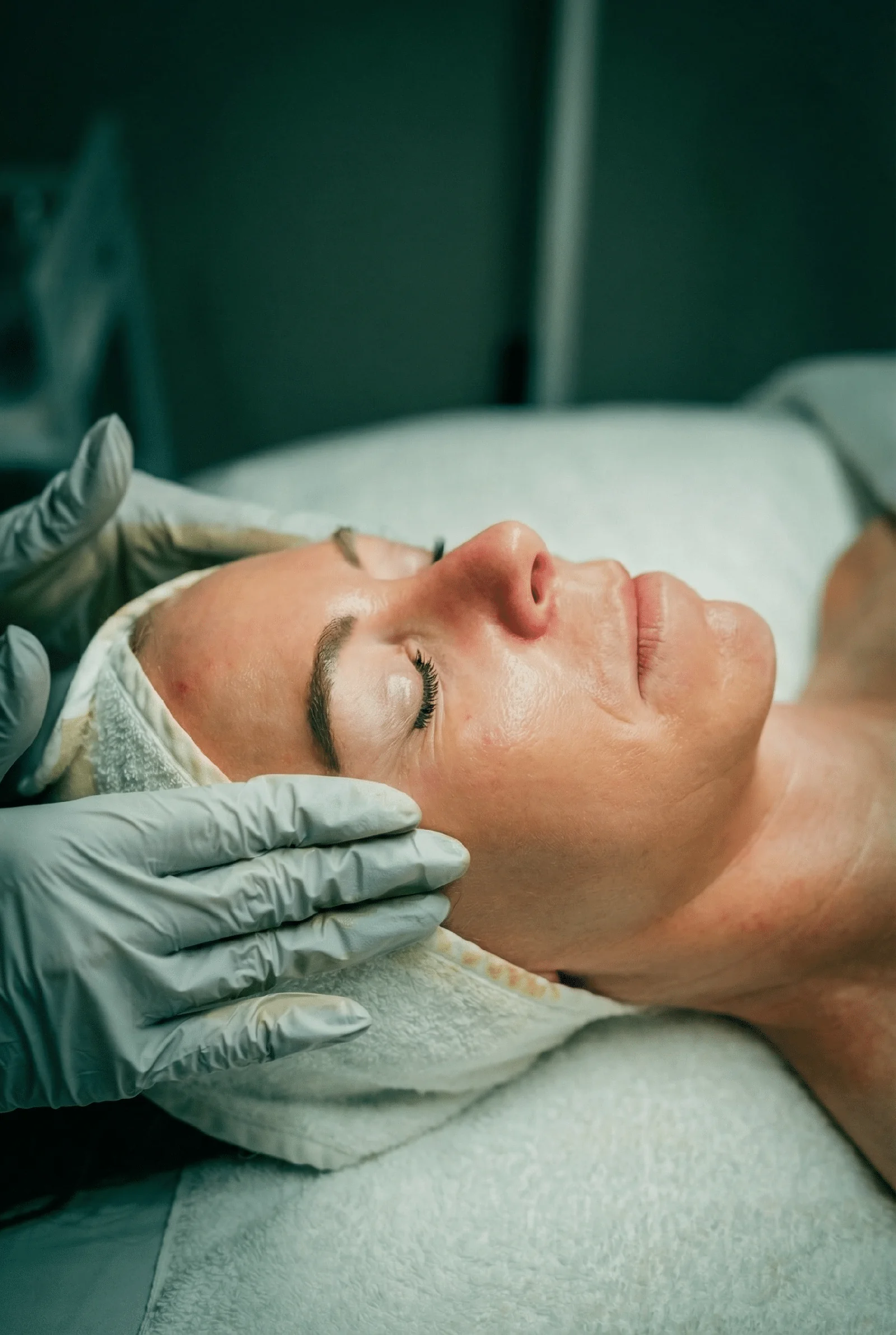

Austin's weather is not neutral on your skin. It is actively working against it — and if you are treating your skin the same way you did in a different climate, or following a skincare routine designed for somewhere else, you are probably not getting the results you should be.
This is a practical guide to what Austin's specific climate does to skin, and what to actually do about it.
The Austin Climate Problem: It Is Not Just the Heat
Most people blame Austin's summer heat for their skin issues. Heat is part of it, but the real culprits are more specific:
UV intensity. Austin sits at 30 degrees north latitude — the same as Cairo and Shanghai. UV index readings regularly hit 10–11 from April through September. This is not "strong sun" — this is the kind of UV exposure that causes measurable DNA damage in unprotected skin within 15 minutes. Austin's UV intensity is meaningfully higher than cities like Chicago, New York, or Seattle, and most people's SPF habits do not account for this.
Hard water. Austin's water is notoriously hard — high in calcium and magnesium ions. Hard water does not rinse cleanly from skin. It leaves a mineral film that disrupts the skin barrier, clogs pores, and makes every product you apply afterward less effective. If your skin feels tight or dull after washing, and you have ruled out your cleanser, the water is likely the issue.
Humidity swings. Austin's humidity is not consistently high — it swings dramatically. Summer afternoons can hit 80%+ humidity, while winter cold fronts drop it below 20% within hours. These rapid transitions stress the skin barrier and trigger reactive oil production in people who are not naturally oily.
Allergens. Austin's cedar, oak, and mold seasons are among the worst in the country. Airborne allergens trigger inflammatory responses that show up on skin as redness, sensitivity, and flare-ups of conditions like rosacea and eczema.
Air conditioning. Austin's summers mean spending the majority of your time in heavily air-conditioned environments. AC strips moisture from the air and from your skin. The combination of outdoor humidity and indoor AC creates a constant cycle of dehydration.
What Austin's Climate Does to Specific Skin Concerns
Hyperpigmentation
Austin's UV intensity is the single biggest driver of hyperpigmentation in our client base. Melasma, post-inflammatory hyperpigmentation from acne, and sun spots all worsen significantly with UV exposure. The problem is compounded by the fact that many people apply SPF in the morning and consider themselves protected — but Austin's UV levels require reapplication every 90–120 minutes of outdoor exposure, and most people do not do this.
What actually helps: A mineral SPF 50 applied correctly (1/4 teaspoon for the face, reapplied), combined with a vitamin C serum in the morning and a retinoid at night. For existing hyperpigmentation, DiamondGlow with a brightening serum, chemical peels (timed for fall/winter), and PDRN treatments address the damage that topicals alone cannot reverse.
Acne and Congestion
Austin's heat and humidity increase sebum production. Sweat mixes with sunscreen, makeup, and environmental pollutants to create a film on the skin that clogs pores if not removed properly. Hard water makes double-cleansing more important here than almost anywhere else.
The other factor: many Austin residents are active — cycling, running, hiking, swimming in Barton Springs. Post-workout cleansing habits (or lack of them) are a major driver of breakouts in otherwise healthy skin.
What actually helps: A salicylic acid cleanser for oily or acne-prone skin, consistent double-cleansing after outdoor activity, and a monthly Acne Protocol facial to clear congestion before it becomes active breakouts.
Dehydration and Barrier Damage
Counterintuitively, Austin's climate causes dehydration even in humid months. The AC-to-outdoor cycle, hard water mineral film, and high UV exposure all compromise the skin barrier — the protective layer that keeps moisture in and irritants out. When the barrier is compromised, skin loses water faster than it can retain it, regardless of how much moisturizer you apply.
What actually helps: A ceramide-based moisturizer (not just hyaluronic acid — HA needs water in the environment to work, and AC strips that). A humidifier in your bedroom. DiamondGlow's serum infusion process bypasses the compromised surface layer and delivers hydration directly into the skin.
Premature Aging
Austin's UV intensity accelerates photoaging — the collagen breakdown, fine lines, and skin laxity caused by UV exposure — at a rate that is meaningfully faster than lower-UV climates. A 40-year-old who has lived in Austin for 20 years without consistent SPF use has likely experienced 5–10 years of accelerated photoaging compared to someone in a lower-UV city.
What actually helps: SPF every day, no exceptions. Retinoids to stimulate collagen production and accelerate cell turnover. Microneedling and Sculptra for structural collagen support. Starting earlier is always better — the goal is to stay ahead of the damage, not catch up to it.
The Austin Skincare Routine: What to Actually Use
This is not a product recommendation list — it is a framework for building a routine that accounts for Austin's specific conditions.
Morning:
- Gentle cleanser (double cleanse if you have hard water sensitivity)
- Vitamin C serum (antioxidant protection against UV damage)
- Moisturizer with ceramides
- Mineral SPF 50 — applied generously, reapplied every 90–120 minutes outdoors
Evening:
- Oil cleanser to remove sunscreen and environmental debris
- Water-based cleanser
- Retinoid (start 2–3 nights per week and build up)
- Ceramide moisturizer
Weekly:
- Exfoliation 1–2x per week (chemical exfoliant preferred over physical scrubs)
Monthly:
- Professional treatment to address what your home routine cannot: congestion clearing, deeper hydration, pigmentation correction, collagen stimulation
When to See a Professional
Your home routine handles maintenance. Professional treatments handle correction and acceleration. In Austin's climate, the gap between what topicals can do and what professional treatments can do is wider than in most cities — because the damage accumulates faster.
Book a professional treatment when:
- Your skin has not improved after 8 weeks of consistent home routine changes
- You have hyperpigmentation that is not responding to topical vitamin C and SPF
- You are experiencing persistent congestion despite consistent cleansing
- You want to address fine lines, texture, or laxity that topicals cannot reverse
- You want a personalized protocol rather than continuing to guess
At Banyan & Bamboo, we start with an AI 3D Skin Analysis ($75) that maps your skin's current state and tells you exactly which treatments will address your specific concerns most efficiently. It is the fastest way to stop guessing and start getting results.
Frequently Asked Questions
Does Austin's humidity mean I do not need to moisturize? No. Austin's humidity is inconsistent, and the combination of UV exposure, hard water, and air conditioning creates chronic barrier damage regardless of outdoor humidity levels. Moisturizing is non-negotiable.
What SPF should I use in Austin? SPF 50 minimum, reapplied every 90–120 minutes of outdoor exposure. Mineral (zinc oxide or titanium dioxide) is preferred for sensitive or acne-prone skin. Chemical sunscreens are fine for non-reactive skin types.
Is the hard water in Austin actually bad for skin? Yes. Austin's water hardness averages 200–300 mg/L of calcium carbonate — classified as "very hard." This leaves a mineral residue that disrupts the skin barrier and reduces the effectiveness of skincare products. A shower filter or consistent double-cleansing helps significantly.
When is the best time of year to do a chemical peel in Austin? October through February. Lower UV intensity means faster healing and better results. Summer peels are possible with strict sun protection, but fall and winter are optimal.
Does Austin's cedar season affect skin? Yes. Cedar pollen is a potent inflammatory trigger. During cedar season (December through February), clients with rosacea, eczema, or reactive skin typically experience flare-ups. Barrier-supportive skincare and anti-inflammatory ingredients (niacinamide, azelaic acid) help manage this.