
See Your Skin's
Future
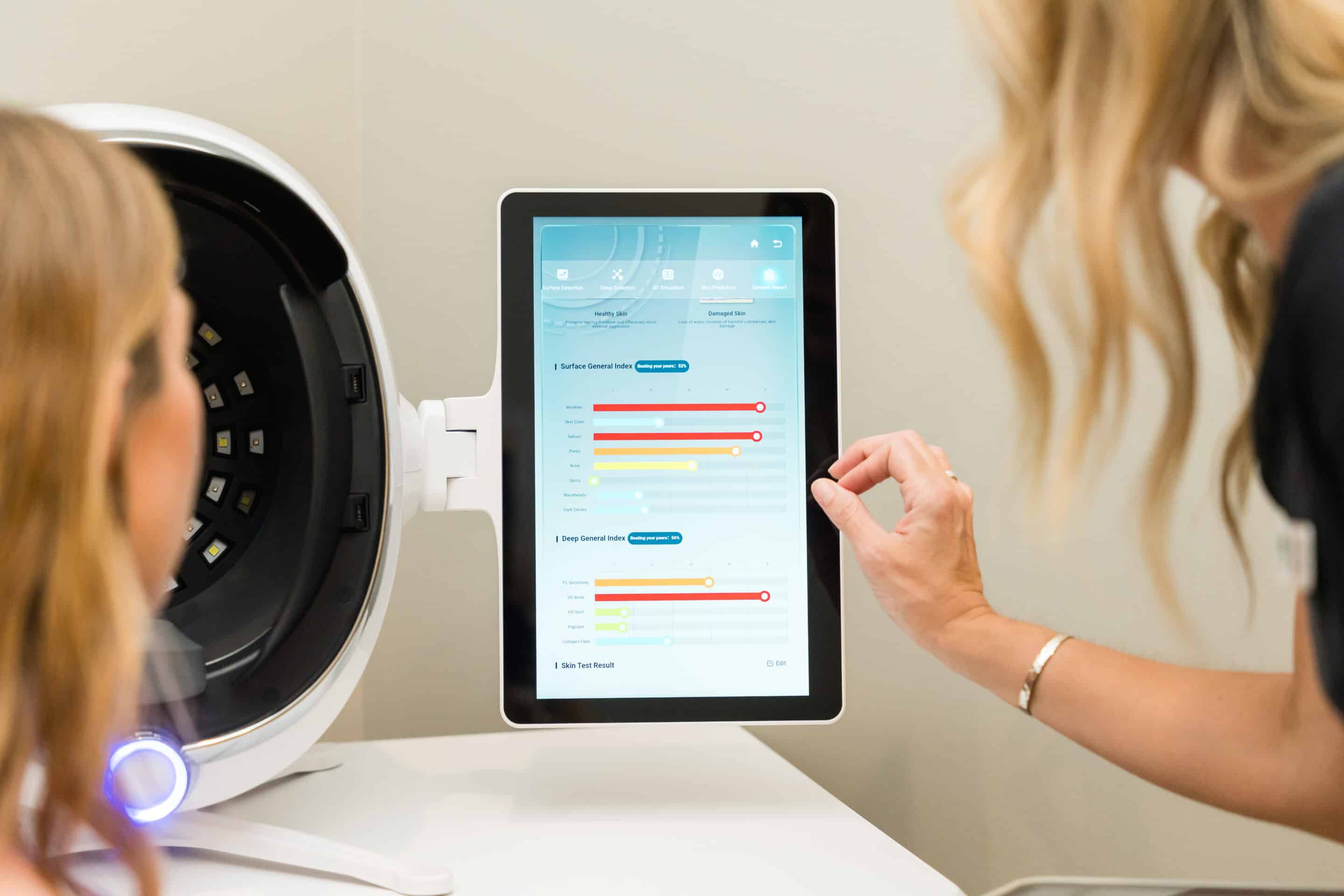
Austin's only AI-powered 3D skin analysis. Our Magic Skin Analyzer reveals sun damage, pigmentation, fine lines, and elasticity beneath the surface — building a data-backed medical aesthetics plan unique to your skin.
✔ Complimentary with any injectable or advanced facial treatment · Standalone scan $75
Discover the Power of AI Skin Analysis
Forget guesswork. Our AI Magic 3D Skin Analyzer looks beyond what you see in the mirror, revealing what's happening beneath the surface. Using multi-spectrum imaging and predictive modeling, it gives you and your provider a clear, data-backed starting point.
365 Beauty Blueprint™
After your scan, your provider builds a results-driven roadmap that evolves with you month by month.
Your Scan & Consultation
Total time: 30–45 minutes. No prep needed beyond arriving with clean skin.
Cleanse
We start with clean skin, free of makeup or sunscreen, for the most accurate reading.
Scan
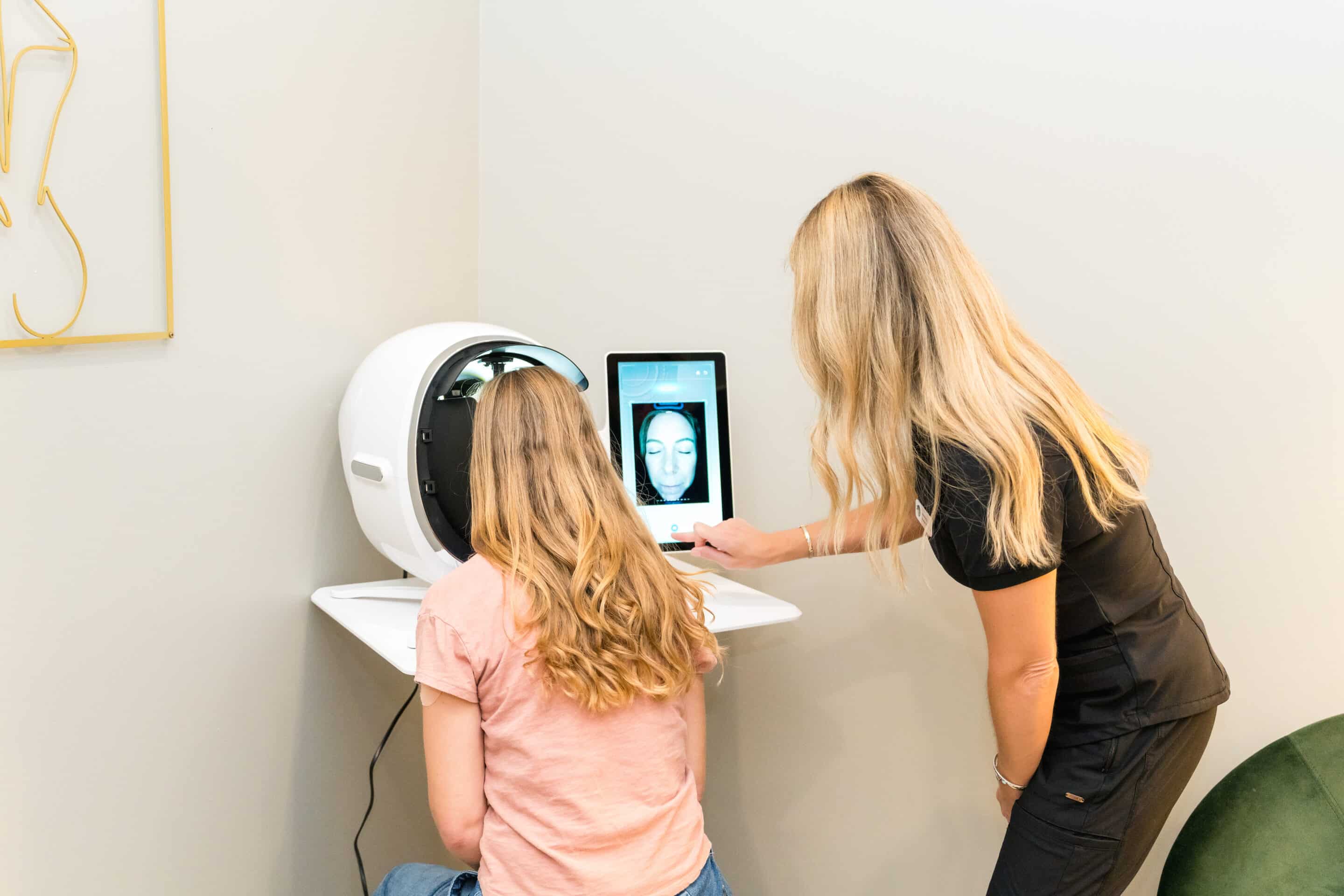
Capture 3D images under natural, polarized, and UV light — eight layers deep.
Review
In-depth study with detailed analysis and projected skin aging. You receive a digital copy.
Plan
Get your personalized 90-day kickoff plan with payment options and scheduling.
Track
Receive a full report with progress benchmarks. Rescan every 90 days to measure results.
Eight Layers Deep
Our AI Magic 3D Skin Analyzer uses a 3-point photo capture system under natural, polarized, and UV light to analyze both surface and dermal layers — revealing what's really happening before it becomes visible.
Precision Skin Mapping
Go beneath the surface. Eight layers deep to reveal what's really going on.
Your Beauty Blueprint™
Analysis into action — a tailored treatment plan for your goals, skin type, and lifestyle.
Track Visible Results
Measurable before-and-after scans every 90 days for goal setting and treatment refinement.
Who Is It For?
In Your 20s
Build the habits your future face will thank you for.
Your 20s are the perfect time to lock in prevention: SPF, antioxidants, gentle exfoliation, and collagen support. Small moves now = major results later.
In Your 30s–40s
Brighten. Smooth. Defend. Repeat.
As collagen and elasticity begin to dip, your skincare strategy deserves a boost. Focus on brightening, firming, hydration, and targeted treatments that fit your pace and goals.
In Your 50s & Beyond
Own your glow, your way.
Skin evolves, and your strategy should too. Now's the time for deep hydration, elasticity boosters, skin tone refinement, and confidence-first rituals.
Men's Skin Health
No guesswork. Just great skin.
Results matter. Whether you're new to skincare or ready to level up, we have a plan that works with your goals and routine — no fluff, no unnecessary steps.
Data Meets Expertise
The AI scan is the starting point, not the destination. Your provider reviews the results with you in real time, translates the data into a clear treatment plan, and answers every question — so you leave with clarity, not confusion.
The 365 Beauty Blueprint™ includes quarterly AI scans, injectables, microneedling, seasonal facials, and customized medical-grade homecare — all designed to evolve with your skin.

Frequently Asked Questions
Does it scan effectively for all skin tones?
Yes — our device is calibrated for all Fitzpatrick skin types, including deeper skin tones that are often underserved by imaging technology.
How does it work?
It's a 3-point photo capture system that analyzes both the surface and dermal layers of the skin using multi-spectrum imaging and predictive modeling.
How often should I do it?
We recommend scans every 90 days to optimize your results and track progress against your treatment plan.
Can I do the scan without a treatment?
Yes — AI scans are complimentary with injectables or advanced facials, or you can book a standalone scan for $75.
What is the 365 Beauty Blueprint™?
After your AI scan, your provider builds a results-driven roadmap designed to evolve with you month by month — including quarterly scans, injectables, facials, microneedling, and personalized homecare.
Your Skin Deserves a Real Plan
At Banyan & Bamboo, we translate real skin data into real results — with personalized treatments that help you glow smarter, not harder. Your AI-powered skin analysis is just the beginning.
Complimentary with injectables or advanced facials · Standalone scan $75
AI Aesthetic Simulator · Try It Free
Preview Your Results Before You Book
Upload a photo and see what Botox, fillers, or skin treatments could look like on your face — before committing to anything. Powered by AI.
Powered by EntityMed · AI Aesthetic Simulator · Results are simulations only